
The Alexandra Lauren Guide to Designing a Dining Room That Entertains Beautifully
A well-designed dining room is more than a place to eat — it’s where conversations linger, celebrations unfold, and memories are made. At Alexandra Lauren, we believe a dining room should balance statement-making design with effortless function, creating a space that feels elevated yet inviting.
Below, we answer the most-asked dining room design questions and show you how Alexandra approaches them — so your space feels intentional, timeless, and ready to entertain.
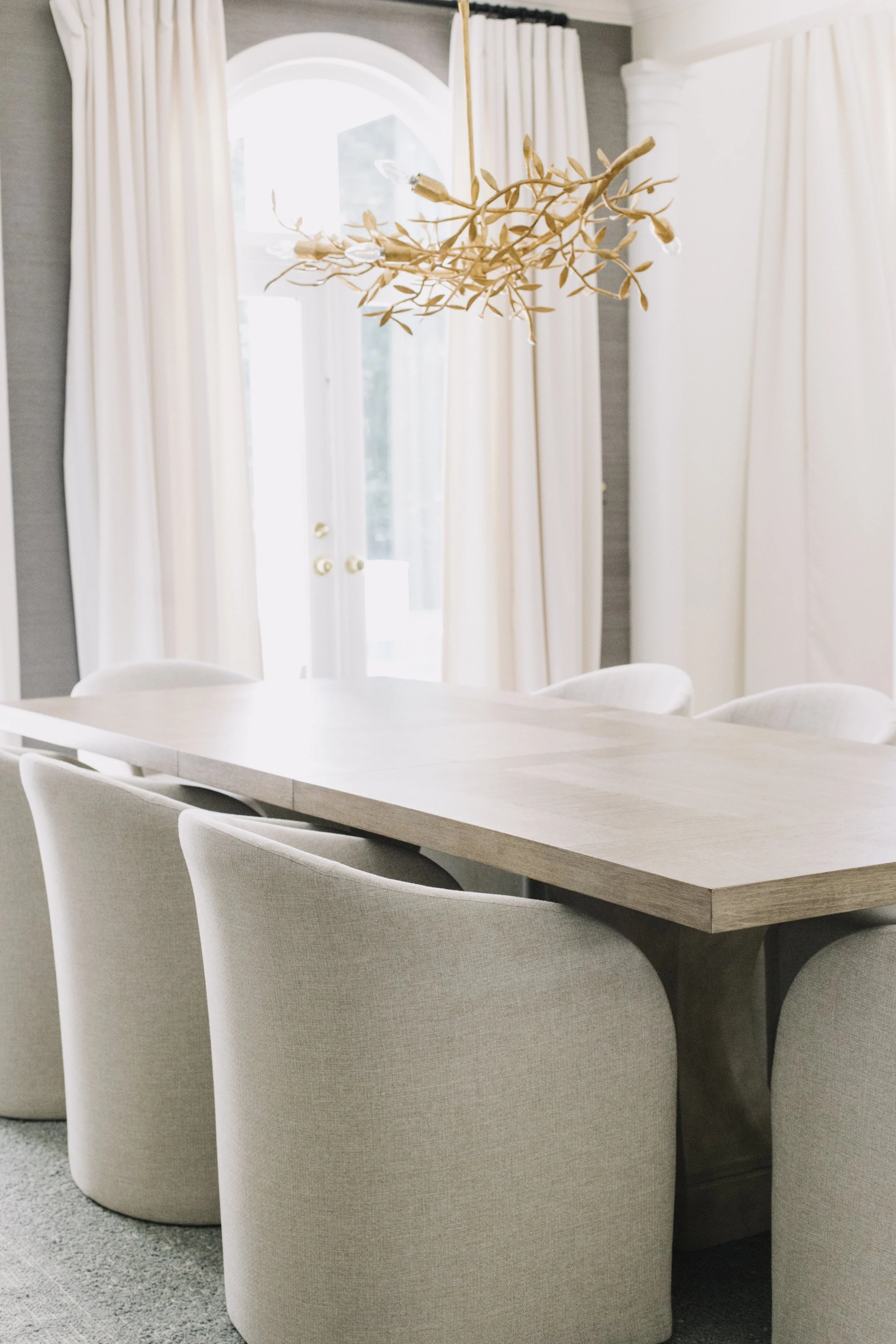
1. What Is the Most Important Piece in a Dining Room?
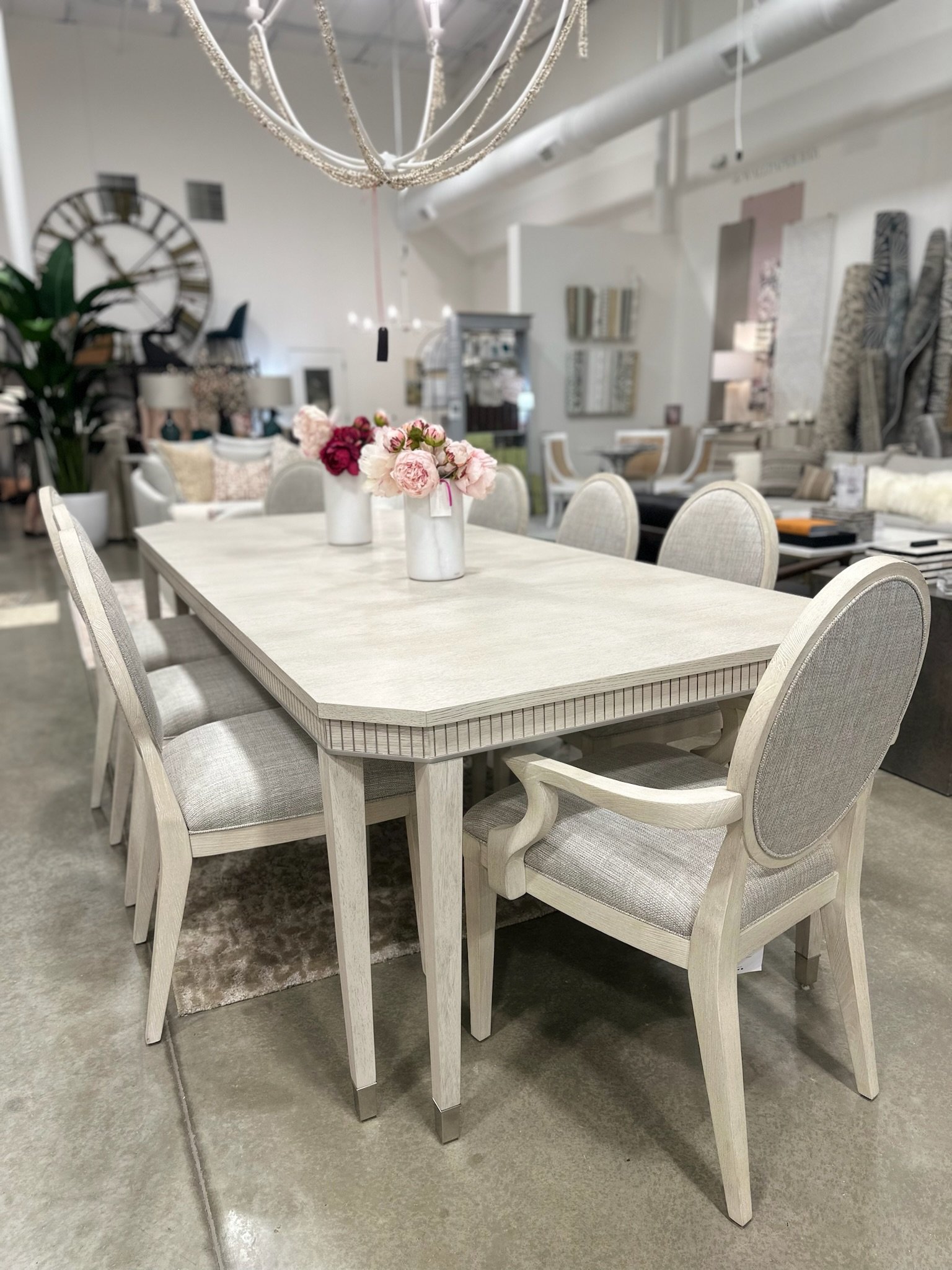
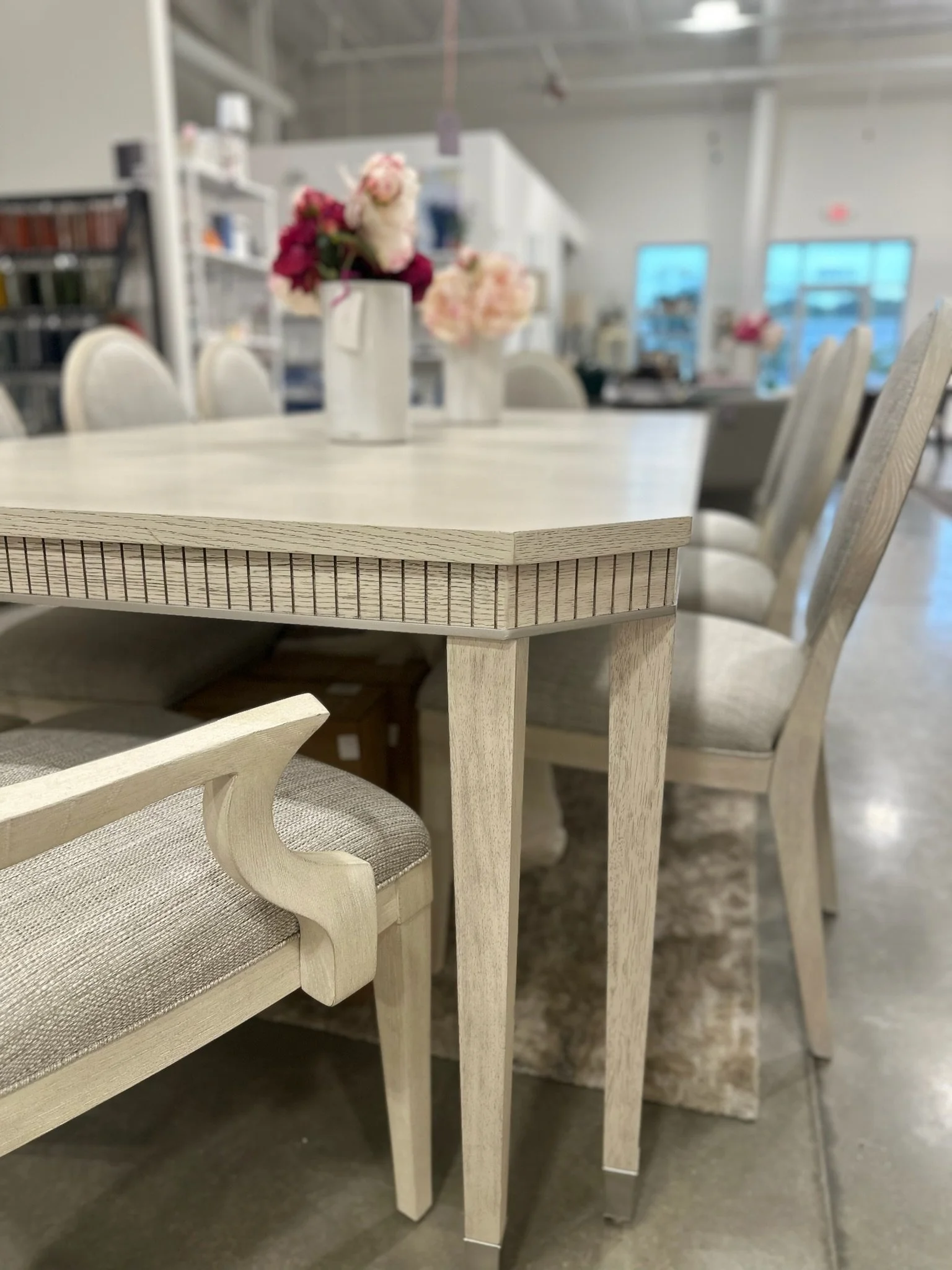
The dining table is the foundation.
It anchors the room visually and functionally. We always start here. We love if you have an heirloom piece handed down for generations. If not we love helping you source this foundational piece.
A successful dining table:
Feels substantial (never underscaled)
Is made from enduring materials like dark wood, marble, or glass
Has presence even when the room is empty
In an Alexandra Lauren dining room, the table is chosen first — everything else layers around it.
2. How Big Should a Dining Table Be?
Comfort is luxury.
Designers plan for:
36 inches minimum of clearance around the table. Measure from the table to the walls, and or other pieces of furniture in the space.Enough surface area for serving without crowding guests
Chairs that can pull out fully without hitting walls or rugs. A basic rule of thumb is to allow at least 2’ of pull back space for a dining chair to pull in and out and for a person to sit down. We also like (in an an ideal situation for the rug to be 2’ larger than the table of your choice on all sides.
A dining room should never feel tight — generous spacing allows the room to breathe and guests to relax.

3. What Shape Dining Table Works Best?
There’s no universal answer — only the right answer for your space.
Rectangular tables work best in long rooms and for larger gatherings. Consider an extension table for occassional larger gatherings. If you a room that can accomodate a large rectangular table but feels square, consider softened or rounded edges at the corners of the table top.
Round or oval tables soften smaller rooms and encourage conversation. For a square dining room a round table is often the best choice.
Glass tables visually open compact spaces, and the light refraction from the table top will help add an illumination to a small space.
Solid wood or stone grounds large expansive open floor plans.
We choose shape based on architecture first, style second.

4. Should Dining Chairs Match?
No — and that’s where personality lives.
We often:
Mix upholstered side chairs with armchairs at the head
Blend textures while keeping finishes cohesive
Use comfort as a non-negotiable (no one enjoys a beautiful but stiff chair)
Upholstered chairs can have contrast chording or trim, and a varying fabric on the back of the seat to the front. This is where its fun to play!
The goal is collected, not catalog-perfect.

5. Do I Need a Buffet or Sideboard?
Yes — if space allows, it’s one of the most valuable pieces in the room.
A buffet:
Adds storage for entertaining essentials
Grounds the dining room visually
Creates a styling moment for art, mirrors, or sculptural objects
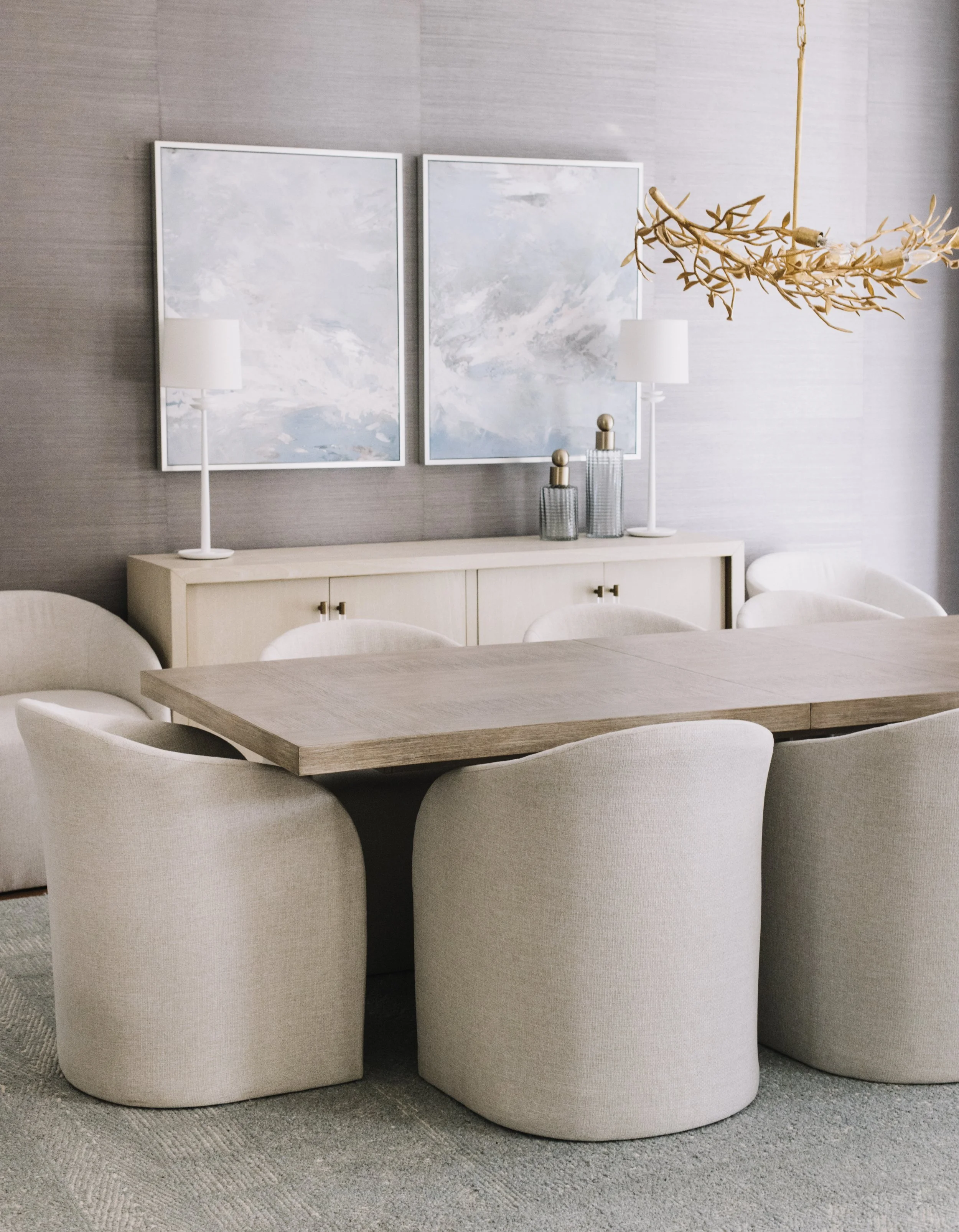
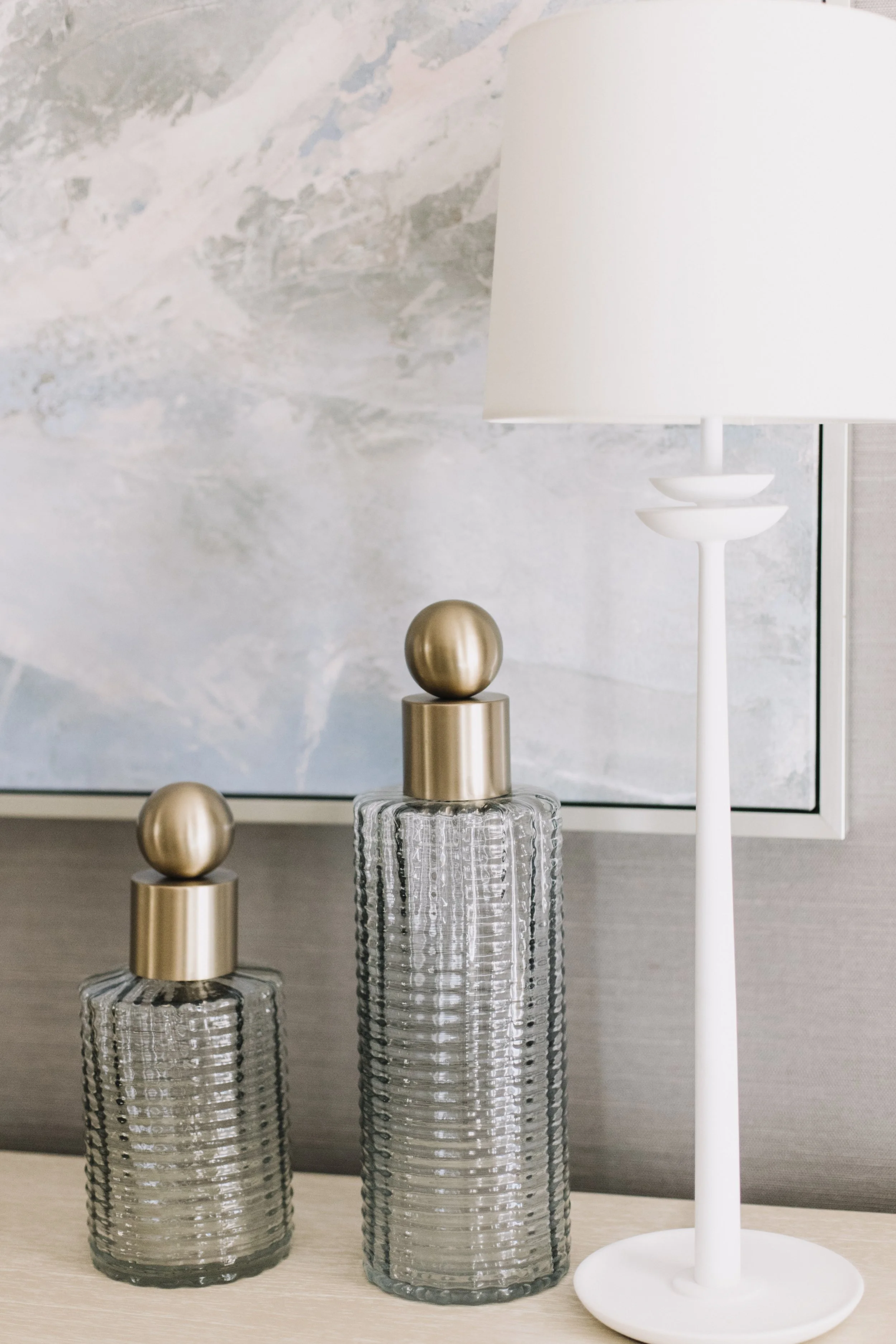
In many homes, the buffet becomes the wall elevation that quietly anchos the room, and offers an opportunity for artwork, a mirror and buffet lamps to give impact and personality to the space.
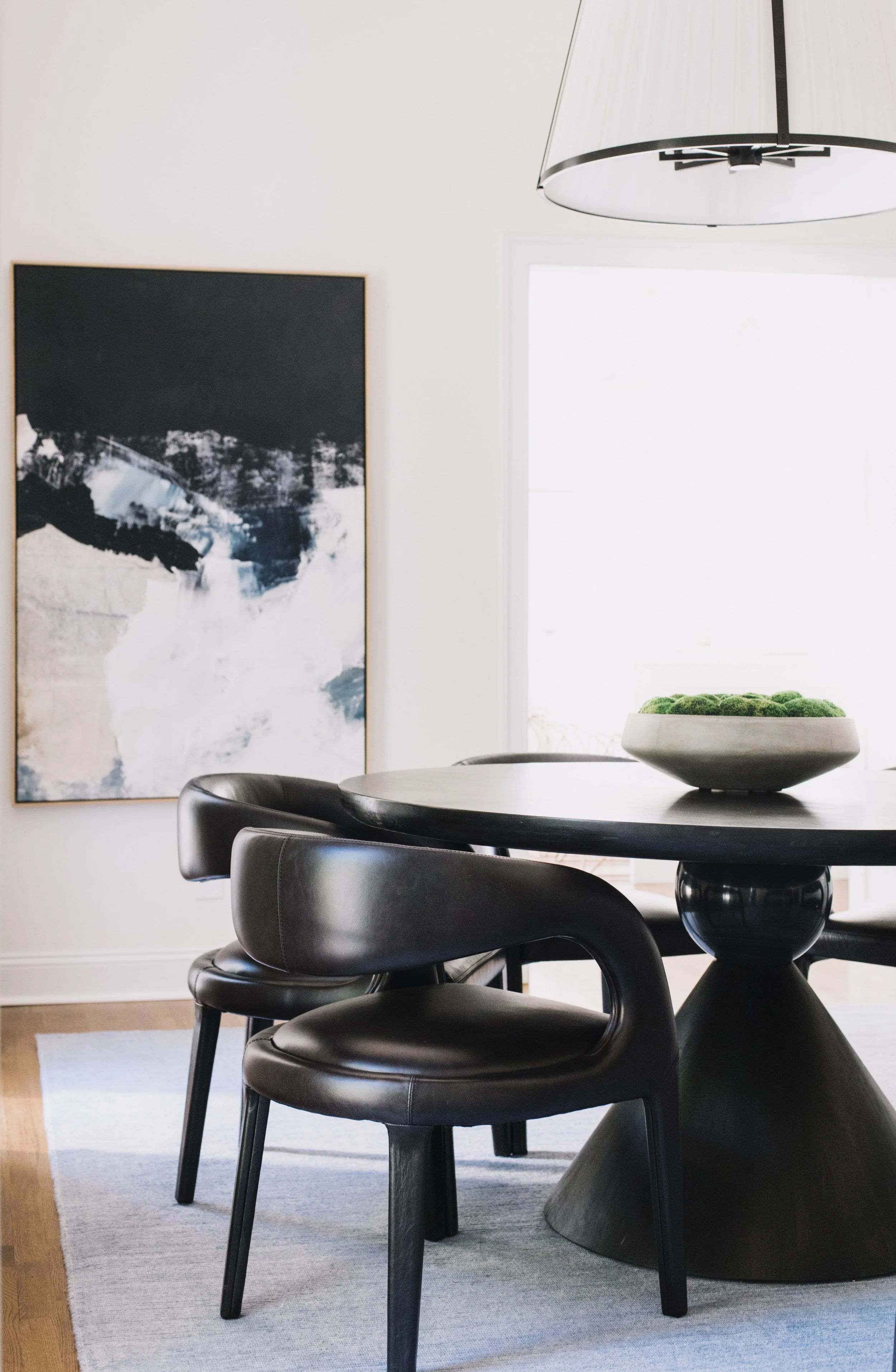
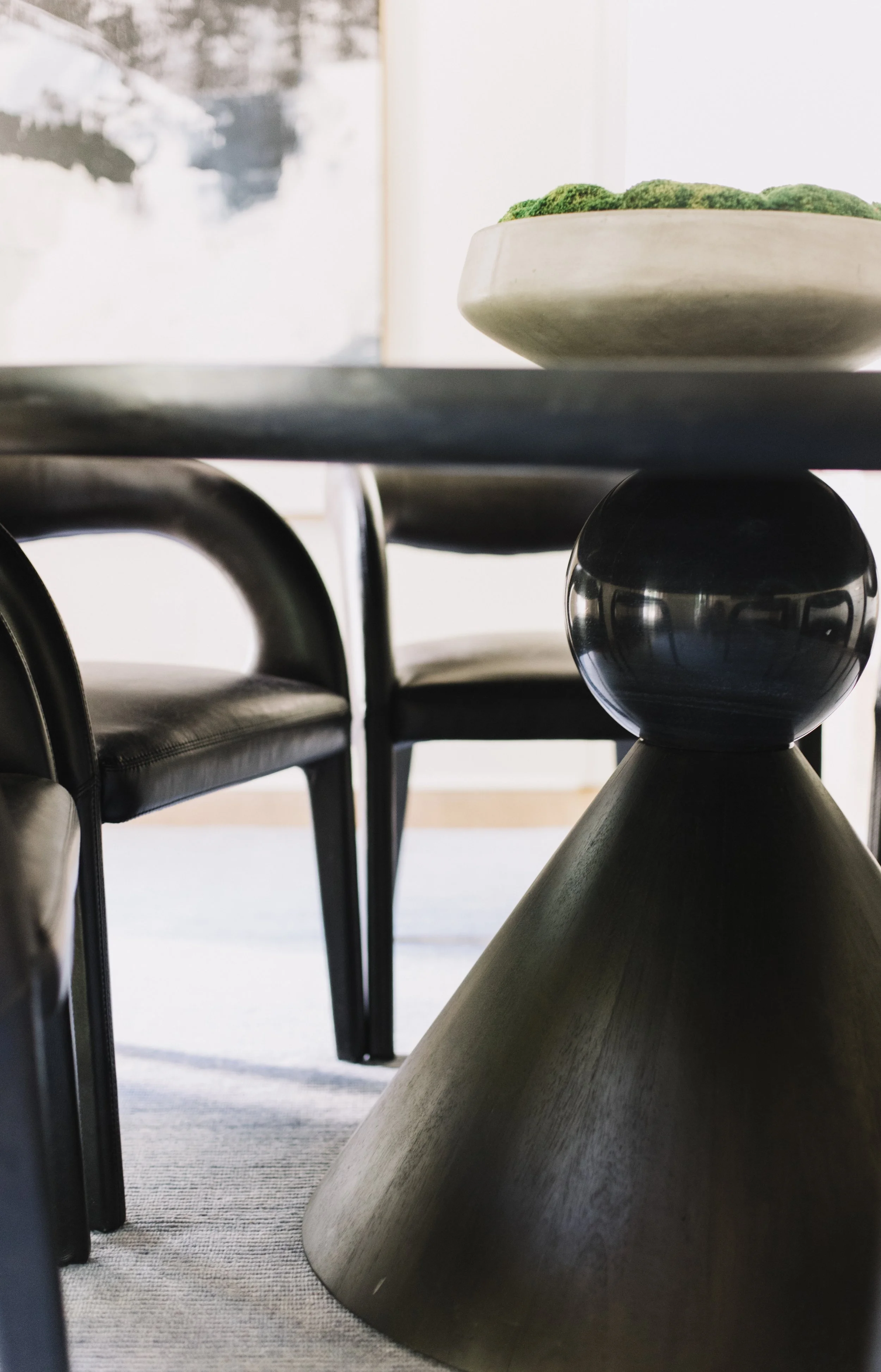
6. What Size Chandelier Should I Use?
A dining room lives or dies by its lighting.
A statement fixture should:
Be proportionate to the table (not the room alone)
Hang 30–34 inches above the tabletop
Center over the table — always
Make sure that the lighting is not wider than the dining table surface. It will overwhelm the room.
Lighting is jewelry for the room. This is not the place to go small.


7. Is One Light Enough in a Dining Room?
Rarely.
Designers layer lighting for flexibility:
A statement chandelier for drama
Dimmers for mood control on ceiling lighting
Accent lighting (lamps or sconces) for warmth and hygee. {LINK TO HYGEE BLOG POST HERE}
Entertaining should feel effortless — lighting sets the tone without effort.
8. Should a Dining Room Have a Rug?
Almost always.
A rug:
Defines the dining zone
Adds softness and warmth
Balances hard surfaces like wood and stone
Anchors the dining table
The Brevin pictured below combines casual sophistication with durability, featuring a hand-loomed Danan design in light blue and cream. Made from PET yarn, this performance-driven rug is perfect for high-traffic areas and livable spaces. Ideal for both indoor and outdoor use, it’s easy to care for and resilient, making it a great choice for homes with children and pets and under a high traffic dining area. Add a touch of inviting elegance to any room or patio.
Its indoor/ outdoor construction makes this a sophisticated worry proof option! If this isn’t your flare, consider materials with polypropylene or PET yarn if you are worried about your guests.
The key is size. All chairs should remain on the rug when pulled out. Make sure your rug is 2’ larger than your dining table on all sides.


9. How Do You Make a Dining Room Look Expensive?
Luxury is about restraint and intention.
We elevate dining rooms by:
Choosing fewer, better-quality pieces
Prioritizing scale and proportion
Using rich neutrals and layered textures
Incorporating art or mirrors with presence
An expensive-looking room never feels over-decorated.
10. What Should Go on Dining Room Walls?
Walls should support the experience, not distract from it.
Our go-to choices:
Oversized mirrors to reflect light and in most cases showcase your chandelier or a window in the room. Always test what will be reflected in the mirror before hanging. We never want it to reflect clutter.
Large-scale art for impact
Gallery walls when the architecture allows
Consider Wallpaper! Wallpaper sets an all encompassing mood. Consider a mural or a bold selection. If you are afraid to go bold, use a grasscloth wallpaper which will add texture, warmth and a five star quality to your walls.
Dining rooms are ideal spaces for bolder wall moments.
11. How Do You Design a Dining Room for Entertaining?
Design for how you actually gather.
That means:
Comfortable seating for long dinners
Surfaces for serving and styling
Lighting that transitions from day to night
A layout that encourages movement and conversation
A beautiful dining room should invite people to stay.
12. Formal or Casual — What’s the Right Choice?
Today’s most successful dining rooms blend both.
At Alexandra Lauren, we aim for:
Formal bones (scale, symmetry, lighting)
Casual comfort (plush chairs, approachable materials)
And creating a bespoke dining room that is uniquely you. Reach out to our design team at interiors@alexandralauren.com with photos of your space to learn more.
The result is timeless, livable elegance.